
 By
By 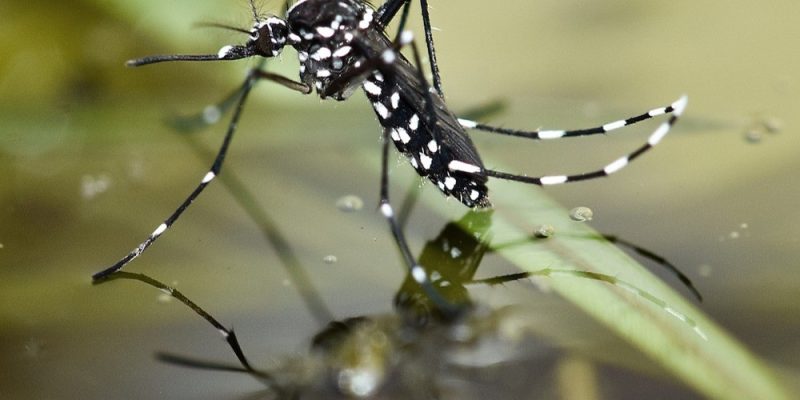
Most of what Kansas City homeowners know about mosquito prevention came from a generation when the dominant backyard biter was a different species with completely different behavior. The screened porch built in 1972, the citronella candles lit at sunset, the rain barrel emptied every Sunday evening, the advice to come inside at dusk to avoid being bitten: all of it was developed for the evening-active Culex mosquito that historically dominated Missouri summer evenings. The mosquito that actually bites people in most Kansas City backyards today is a different species entirely, and the old advice does almost nothing to stop it. Kansas City pest control providers who work mosquito calls, including ZipZap Termite & Pest Control in Lawson, see homeowners every summer who are following their parents’ and grandparents’ prevention playbook and getting aggressively bitten anyway. The playbook is not wrong. It is just aimed at the wrong mosquito.
The Species Shift Most Homeowners Have Not Noticed
The Asian tiger mosquito (Aedes albopictus) is an introduced species from East Asia that was first documented in the continental United States in the mid-1980s. Its range expansion across the Midwest has been steady, and Missouri is now firmly established territory. CDC surveillance maps show continuous presence across the Kansas City metro and surrounding counties, and University of Missouri Extension reports its population dominance in most suburban yards during the May-to-September season.
The species looks distinctive once homeowners know what to look for. Small, no larger than a typical native mosquito, but strikingly patterned in black and white with a single white stripe running down the center of the thorax and banded legs. The contrast is high enough that identification is straightforward once someone has seen one clearly.
What matters more than appearance is behavior. The Asian tiger mosquito operates on a schedule and in a range that none of the traditional mosquito prevention playbook addresses.
Why the Old Rules Fail
Five pieces of generational mosquito advice that worked for Culex produce poor results against Asian tigers.
Avoiding dusk outdoors does nothing. Asian tiger mosquitoes are daytime biters, with peak activity in mid-morning and late afternoon rather than at dawn and dusk. A homeowner who finishes yardwork at 2 p.m. because “mosquitoes come out at sunset” has already spent the active biting window outside, unprotected.
Emptying the rain barrel once a week is inadequate. Asian tiger mosquito development from egg to biting adult takes roughly 7 to 10 days in warm weather, which means a weekly empty-and-refill schedule catches some developing populations but misses faster cohorts. Daily dump-and-refresh, or a Bti treatment in any standing water that cannot be eliminated, produces better control.
Large-source prevention misses the breeding reality. Traditional mosquito advice focused on ponds, birdbaths, clogged gutters, and low-spots in the yard. Asian tiger mosquitoes breed in water sources a fraction of a teaspoon in volume: discarded bottle caps, plant saucers, fold creases in tarps, upright children’s toys with collected rainwater, clogged drains, the ribbing on the underside of plastic patio chairs, and tree holes. The backyard audit has to shift from “big water sources” to “anything that holds a thimble of water for a few days.”
Citronella candles and porch torches do little. The effective radius of most repellent candles and torches is roughly two to three feet, which is inadequate for a patio-sized space and irrelevant against an aggressive daytime biter that will approach exposed skin through the smoke.
Screened porches matter less when the biting happens in the yard. Traditional Culex exposure was mostly during evening porch time, and screening that outdoor space solved most of the problem. Asian tiger bites happen while mowing, gardening, playing with children, walking the dog, and doing any other daytime activity in the yard proper, where a screened porch is not the relevant defense.
What Actually Works for Asian Tiger Mosquito Control
The effective prevention framework looks meaningfully different from what most Kansas City homeowners learned growing up.
Eliminate every small water source on the property, not just the obvious ones. A property walk-through should check bottle caps, plant saucers, toys, tarps with folds, grill cover folds, the bottom edges of patio umbrellas, birdbath collection points that are not the main basin, outdoor pet bowls, unused planters, and the junctions where downspouts meet splash blocks. The smallest practical water source that can be eliminated usually should be.
Treat the water sources that cannot be eliminated with Bacillus thuringiensis israelensis (Bti). Dunks for rain barrels, ornamental water features, and retention areas deliver biological larval control that lasts roughly 30 days. Bti does not harm fish, birds, pets, or other insects.
Apply EPA-registered personal repellents when outdoors during the active period, which for Asian tigers means most of the daylight hours. DEET at 20 to 30 percent, picaridin at 20 percent, oil of lemon eucalyptus, and IR3535 all have CDC-endorsed effectiveness data.
Treat clothing with permethrin. Factory-treated permethrin clothing retains effectiveness through roughly 70 washes. Spray-on permethrin retains effectiveness for 5 to 6 washes. Either option substantially reduces bite counts and costs little.
Professional perimeter treatment makes sense on properties with heavy pressure. Residual pyrethroid application to the resting sites adult mosquitoes use during the day (undersides of leaves, dense shrub interiors, shaded landscape beds, fence-line vegetation) produces meaningful reductions that survive rainfall within reason. Timing matters: treatment applied in late April or early May before populations build delivers better season-long results than treatment applied in July after the population peaks.
Why Professional Kansas City Pest Control Looks Different for This Species
A Kansas City pest control provider treating for Asian tigers is not doing the same job as a technician spraying for Culex. The treatment sequence targets vegetation resting sites rather than general air fogging. The application timing runs on a shorter cycle (every three to four weeks during peak season) because populations rebuild quickly from unreached sources. The source-reduction walkthrough focuses on micro-habitats the homeowner often dismisses.
Properties in the metro with significant outdoor use, children playing in the yard during summer afternoons, dogs spending time outdoors, or any history of disease-vector concerns benefit from the professional approach more than they would have benefited from equivalent effort aimed at evening Culex populations twenty years ago.
The Short Version
The mosquito biting Kansas City homeowners in the backyard today is not the mosquito their parents learned to avoid. Asian tiger mosquitoes are daytime-active, breed in tiny water sources, and respond poorly to the prevention playbook developed for evening Culex. Effective control requires eliminating thimble-sized water sources, treating the larger water that remains with Bti, using repellents during the day rather than just at dusk, and adjusting professional treatment schedules to match the species. For homeowners running the old playbook and still getting bitten, a Kansas City pest control provider such as ZipZap Termite & Pest Control can build a program aimed at the species that is actually causing the problem.











Comments