
 By
By 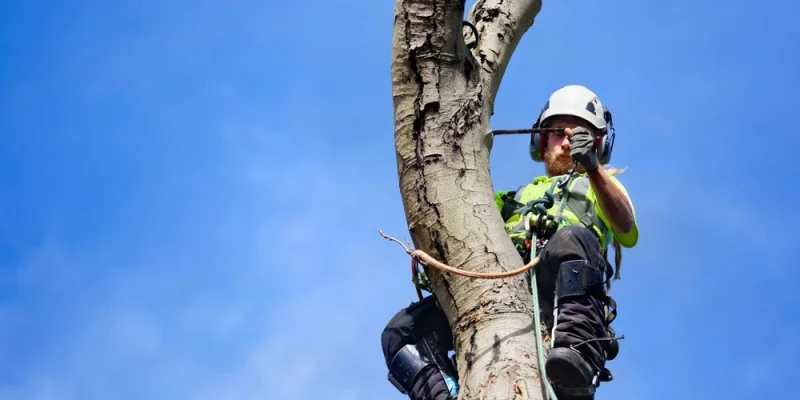
The three terms describe work at very different scales. Pruning is the family name for nearly all cutting carried out on a living tree. Crown reduction is one specific job within that family. Pollarding sits at the far end of it, a technique so drastic that it changes how a tree grows for the rest of its life. Mixing them up is the most common mistake people make when booking tree work, and the wrong request can cost a tree decades.
Pruning covers nearly everything
When someone in the trade says pruning, they mean the selective removal of branches for a purpose: health, safety, light, shape or fruit. Taking out deadwood is pruning. Removing a limb that rubs against its neighbour is pruning. So is cutting a young tree to build a strong structure for later life, which goes by the name formative pruning. The craft lies in choosing the right branch and the right point on it, so the tree seals the wound cleanly and carries on as if nothing happened. Well-pruned trees rarely look pruned at all. That is rather the point.
Crown reduction makes the whole tree smaller
The crown means everything above the trunk, all the branches and foliage together. A crown reduction shortens branches across the whole crown, bringing down both the height and the spread while preserving the tree’s natural outline. Each branch gets cut back to a smaller side shoot that takes over as the new growing tip. Done properly, the result looks like the same tree, only smaller. When you book this work, agree on the amount in metres, such as a reduction of two metres in height and one in spread, because vague percentages mean different things to different climbers.
British Standard BS 3998 sets out how this work should be done, and it draws a firm line between reduction and topping. Topping means sawing straight through the main limbs wherever it happens to be convenient. The wounds never seal, the tree throws out a panic of weakly attached regrowth, and its life gets shorter. Any firm that offers to top a tree is offering to wreck it slowly.
Pollarding is a lifetime commitment
Pollarding removes every branch back to the trunk, or back to a skeleton of short main limbs. The tree answers with a dense flush of new shoots, and those shoots come off again on a repeating cycle, often every one to three years. The swollen knuckles you see on London plane trees and on riverside willows are the result of decades of exactly this routine.
Two warnings come with it. The first: pollarding should begin while a tree is young, since young wood seals small wounds well, while a mature tree cut this way for the first time may never recover. The second: once begun, it cannot stop. Pollard regrowth attaches weakly, so a neglected pollard grows more dangerous with every season missed. Willow, lime and plane respond beautifully. Beech and most conifers simply die back.
Matching the work to the tree
Often, the right answer is none of the above. A garden starved of light may only need a crown thin, where a portion of the inner branches comes out so that sun and wind pass through, leaving the size untouched. A tree brushing a parked car may need a crown lift, the removal of the lowest limbs for clearance. A local tree surgeon will weigh the species, the tree’s condition and whatever stands beneath it before recommending one treatment over another, and the honest ones will talk you out of work the tree does not need. A tree cannot regrow a bad decision. Make the choice once, and make it carefully.








Comments